America at 250 will be a nationwide celebration, with events, reenactments, and festivals taking place across the country.
In 2026, the United States reaches its US Semiquincentennial, marking 250 years since the country’s founding.
In this guide, I have broken down the best places to travel in 2026 for America’s 250th Anniversary, including historic cities and Revolutionary War sites.
There are also practical planning tips to help you build an unforgettable itinerary.
I have visited most of them, and they have all left their mark.
America at 250: At A Glance
- Official Theme: A More Perfect Union
- Primary Route: The Northeast Corridor (Boston, NYC, Philly, D.C.)
- Peak Dates: June 19 – July 4, 2026
- The Spoiler: FIFA World Cup 26 matches in Philly/NYC (expect high hotel prices)
- Pro Tip: Use the 7-Day Revolutionary Route via Amtrak to skip the traffic.
America at 250: Inside This US Semiquincentennial Guide
- The Cities: Boston | Lexington & Concord | NYC | Philadelphia
- The Sites: Valley Forge | Saratoga | Charleston & Savannah | Yorktown
- The Legacy: Washington, D.C.
- The Detours: Essential Side Quests
- The Plan: 7-Day Revolutionary Train Itinerary
- The Tools: 2026 Traveler’s Toolkit & Resources
Boston: The Spark Of The Semiquincentennial
- Best for: Walkers, city lovers, and fans of a good story.
- Vibe: Compact, energetic, and unapologetically proud.
Why Visit Boston in 2026?
I have always thought of Boston as a pretty radical, happening city, and it really has a story to tell.
18th-century meeting houses are tucked between glass skyscrapers and bustling markets.
There is so much to see and do here, so make sure you spend a few days if you can.
In 2026, Boston is leaning into its role as the spark of the Revolution.
As part of America’s 250th Anniversary, the city is hosting Sail250, a massive gathering of international tall ships, and the harbor will be the stage for nightly patriotic festivities.
This city was the hotbed of the revolution and is proud of it.
Revolutionary War Sites to Visit
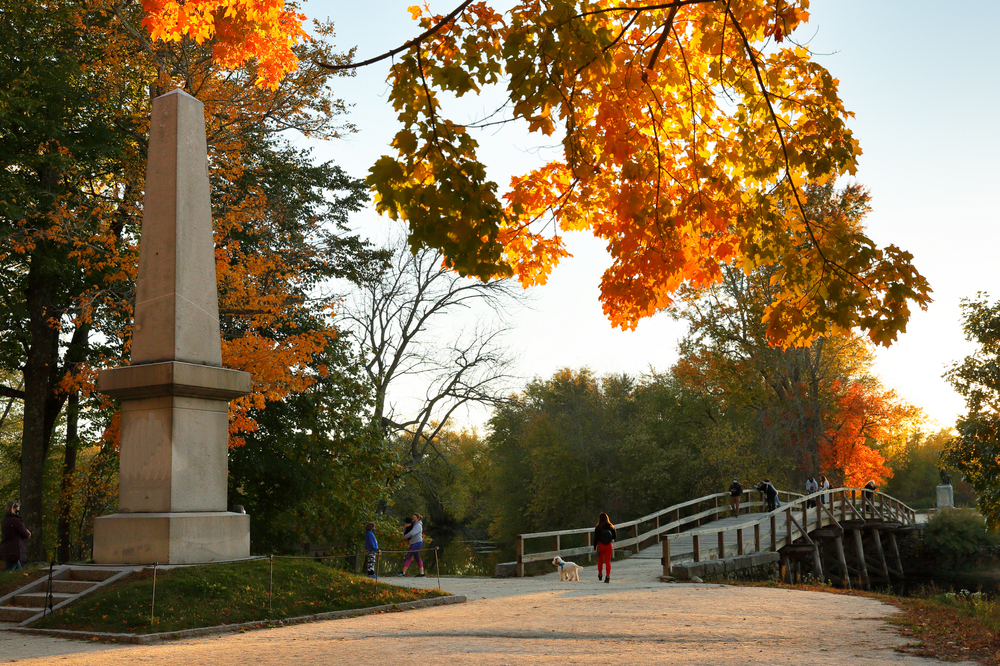
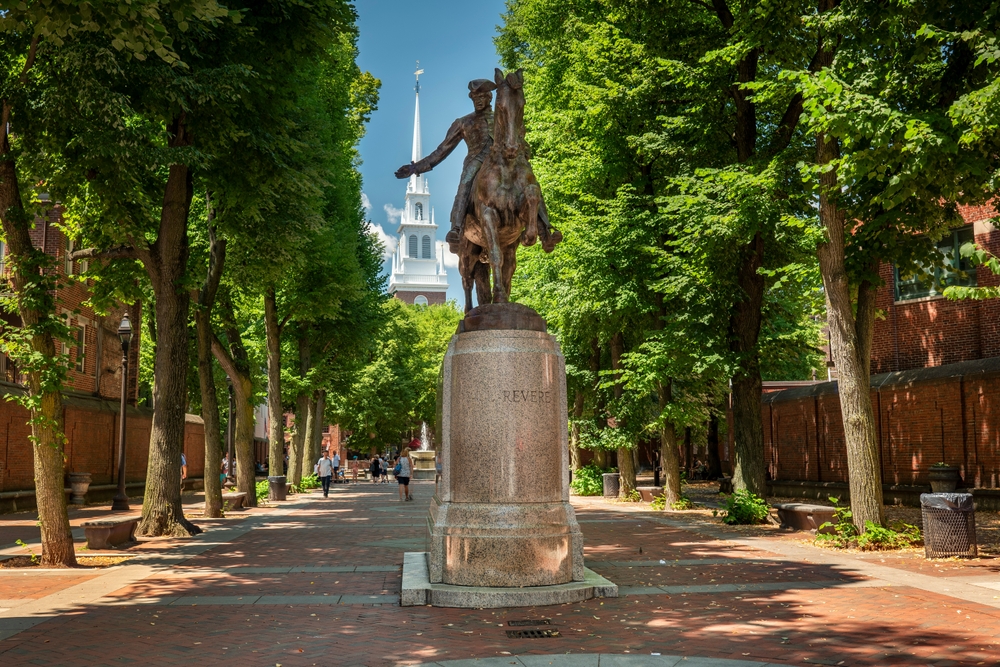
The Freedom Trail is the main event, connecting 16 significant sites, including the Old State House (site of the Boston Massacre) and the Paul Revere House.
For a deeper dive, head to the Boston Tea Party Ships and Museum for a high-tech, immersive look at the night that changed everything.
The Perfect Boston Daily Itinerary
- 09:00 – The Freedom Trail: Start at Boston Common. Walking early allows you to appreciate the Granary Burying Ground (where Sam Adams and Paul Revere rest) before the mid-day tour groups arrive.
- 11:30 – Faneuil Hall: Known as the Cradle of Liberty, it’s where the ideas of the Revolution were first shouted to the masses.
- 13:00 – North End Lunch: Walk into the North End, Boston’s historic Italian district for lunch.
- 15:00 – Old North Church: In 2026, the church will feature a special lantern display that recreates the ‘one if by land, two if by sea’ signal. It is a powerful, visual reminder of the start of the war.
- 19:00 – Harbor Cruise: End your day on the water. See the skyline from the harbor as anniversary fireworks light up the night. It’s the perfect way to cap off the experience.
Where To Stay In Boston
- High End: The Whitney Hotel Boston
- Moderate: Harborside Inn
- Budget: Copley House
Recommended Tours In Boston
- Boston: Full Revolution Story Epic Small Group Walking Tour Book Here
- From Boston: Full-Day Historical Lexington & Concord Tour Book Here
- Boston: 250 Freedom Trail Walking Tour Book Here
America at 250: Philadelphia
Philadelphia is the host of the official Red, White, & Blue To-Do.
Philly in 2026 is the ultimate destination for patriotic festivities.
The city is launching Ring It On, a year-long celebration featuring massive neighborhood festivals and 52 Weeks of Firsts.
You’ll find expanded programming across the Old City.
And a landmark exhibition at the Museum of the American Revolution titled The Declaration’s Journey, which frames the founding as a fragile, global, and deeply human event.
America at 250: Revolutionary War Sites to Visit
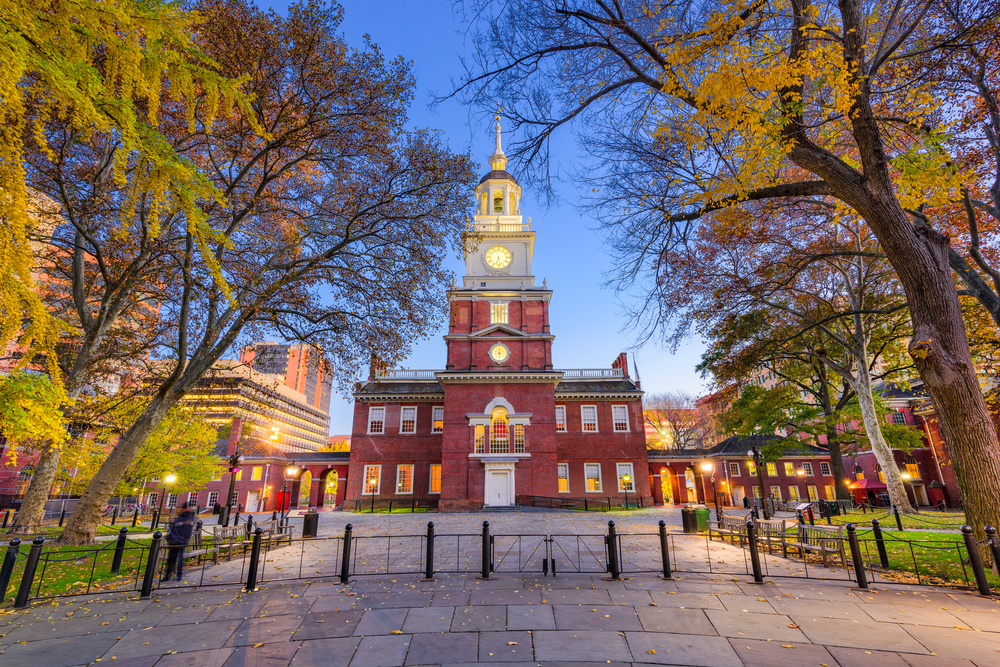
Independence Hall anchors the historic district, but the surrounding streets are just as vital.
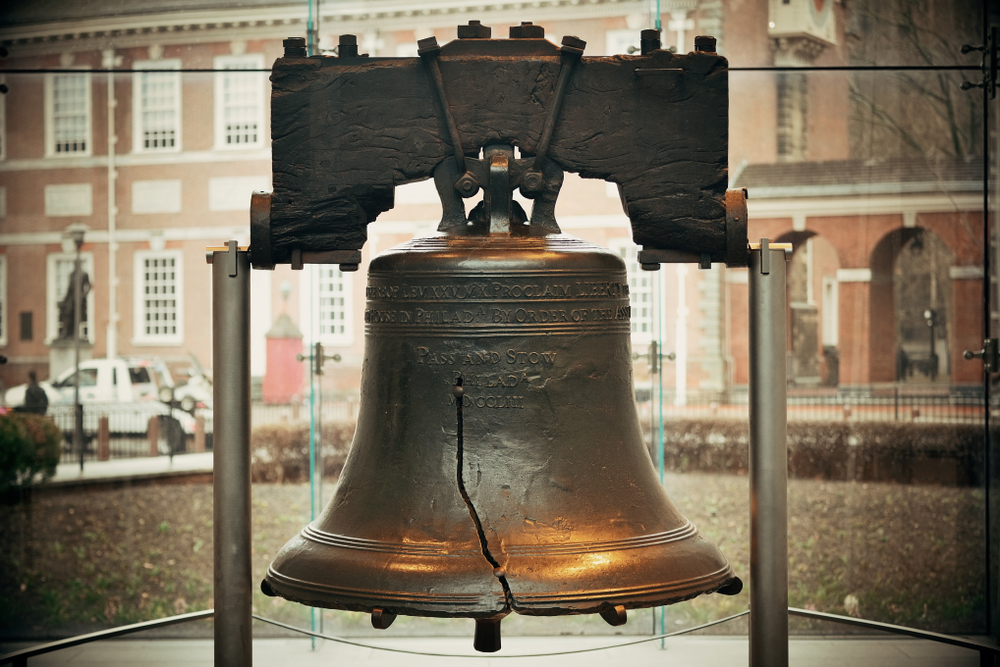
Within a few blocks, you can visit the Liberty Bell, Congress Hall, and Elfreth’s Alley, creating the densest cluster of historic places in America.
The Perfect Philadelphia Daily Itinerary
- 08:30 – Independence Hall: Start here. Early entry means fewer crowds and time to absorb the space.
- 10:30 – Liberty Bell: The line here moves efficiently by mid-morning. Don’t just snap a photo here; read the exhibits.
- 12:30 – Reading Terminal Market: Take a break and explore the market. Grab a cheesesteak or a Schmitter, a steak sandwich on steroids that is a rite of passage for any Philly visitor.
- 14:00- Museum of the American Revolution: Spend your afternoon in the immersive galleries. For America at 250, the museum is showcasing rarely-seen Revolutionary War flags and artifacts that put the common person’s experience front and center.
- 17:00- Elfreth’s Alley: As the light softens, walk the oldest residential street in the U.S.
Read my Things to do in Philadelphia for interesting options.
Where To Stay In Philadelphia
- High End: The Rittenhouse Hotel
- Moderate: Penn’s View Hotel Philadelphia
- Budget: Archway Hotel Residence
Recommended Tours In Philadephia
- Philadelphia: Revolutionary Walk Through Historic Old City Book Here
- Philadelphia: History, Highlights & Revolution Walking Tour Book Here
- Philadelphia: Revolution and The Founders History Tour Book Here
Valley Forge: The Endurance of the Continental Army
- Best for: Reflective travelers, hikers, and history purists.
- Vibe: Quiet, huge, and emotionally heavy.
America at 250: Why Visit Valley Forge?
In southeastern Pennsylvania, approximately 20 miles northwest of Philadelphia, sits Valley Forge National Historical Park.
It marks the location where the Continental Army, under the command of General George Washington, spent the harsh winter of 1777–1778.
It’s a place where many experienced hardship, and many lost their lives. I found it very moving.
For those exploring historic places in America during the Semiquincentennial, Valley Forge offers a necessary reality check and a place to remember those who lost their lives.
The park encompasses 3,500 acres of rolling hills and woodlands, featuring reconstructed log huts, original fortifications, and the house used as Washington’s Headquarters.
Revolutionary War Sites to Visit
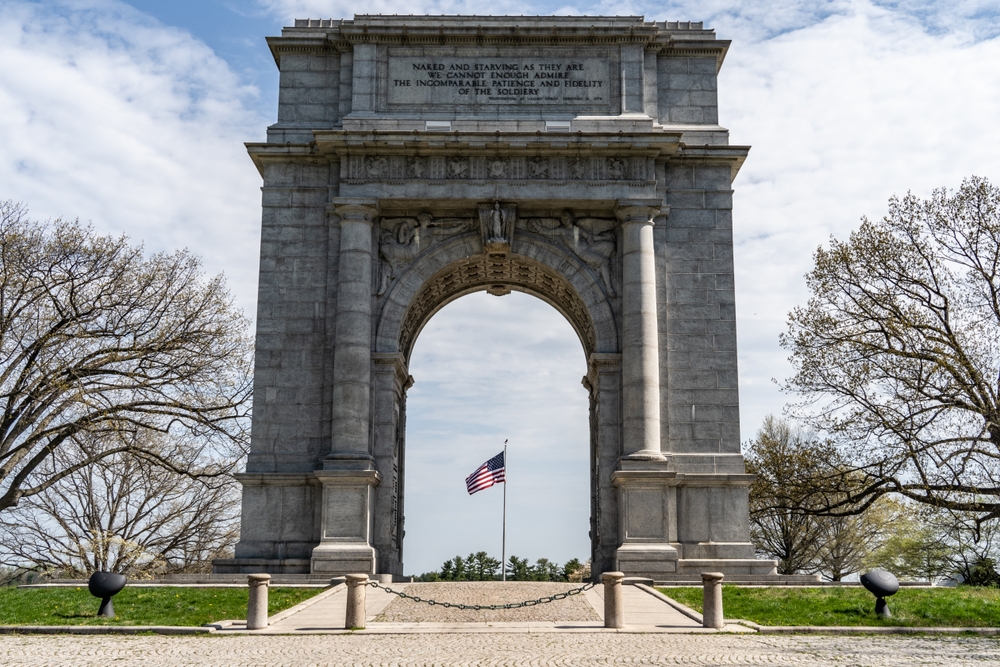
Key sites like Washington’s Headquarters, the reconstructed encampment huts, and the National Memorial Arch work together to tell the story of what happened here.
In 2026, look for the Living History programs where reenactors demonstrate the daily survival skills, from blacksmithing to medicine, that kept the army alive.
The Perfect Valley Forge Itinerary
- 09:00 – Visitor Center: Start here for essential context and information about the winter of 1777.
- 10:00 – Park Loop Drive: Drive the winding roads slowly. Stop at the overlooks and let the sheer scale of the encampment sink in.
- 12:30 – Picnic Lunch: Eat outside if the weather allows.
- 14:00 – Encampment Trails: Walking the trail between the log huts makes this place seem more real.
- 16:00 – Washington’s Headquarters: End your day at the Isaac Potts House.
Book Now: Philadelphia: Valley Forge National Historical Park Tour
Saratoga, New York: The Turning Point of the American Revolution
- Best for: Battlefield hikers and those who love exploring the landscape.
- Vibe: Scenic, rural, and eerily calm.
Why Visit Saratoga in 2026?
This is the battlefield that changed the world.
At Saratoga, the Americans proved they could defeat a global superpower, bringing France into the war.
For the America at 250 celebrations, Saratoga is unveiling a Battlefield Loop upgrade, making it one of the most accessible and scenic Revolutionary War sites for hikers.
The Saratoga National Historical Park is beautiful and quite a peaceful place, but in 1777, it was anything but.
Revolutionary War Sites to Visit
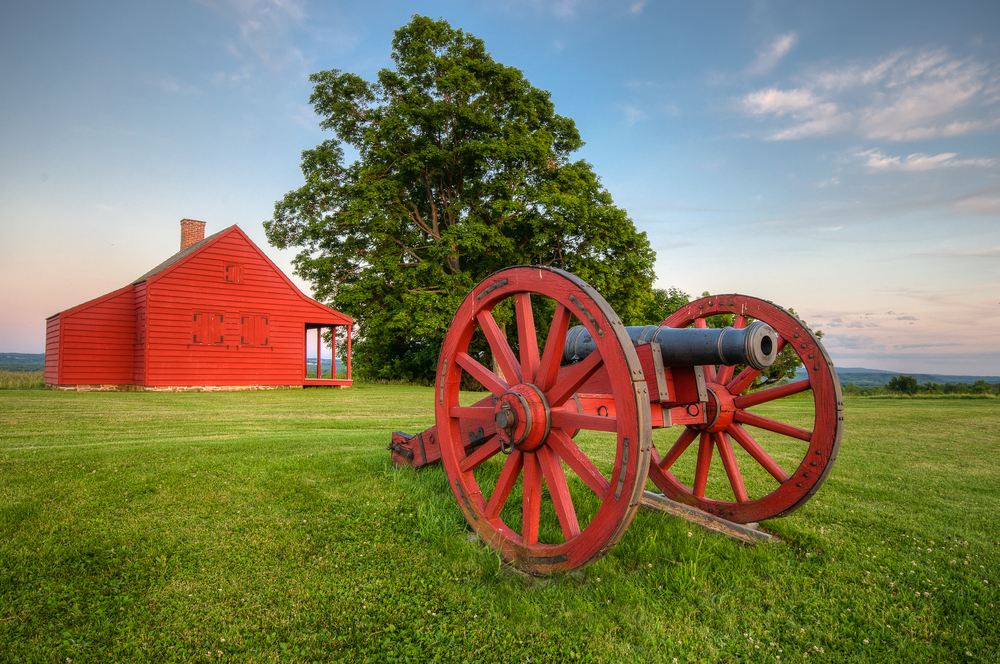
The park is essentially an open-air classroom. The Bemis Heights fortifications and the Saratoga Monument are the big draws, but don’t overlook the Boot Monument.
It is the most famous ‘unnamed’ monument in America, dedicated to the heroism (and later treason) of Benedict Arnold.
The Perfect Saratoga Daily Itinerary
- 09:30 – Visitor Center: The battle was complex, and the 2026 updated maps help you understand why this specific topography changed the world.
- 10:30 – Battlefield Loop: This is a 10-mile drive. Drive slowly and stop at every overlook. For America at 250, many stops feature augmented reality views of the 1777 landscape.
- 13:00 – Picnic Lunch: There is no better place for a quiet lunch.
- 15:00 – Bemis Heights: Walk the ground where the story turned. Here is where the American defense held firm, and the British advance finally collapsed.
- 17:00 – Saratoga Monument: Finish your day by climbing the monument (or viewing it from the base).
Where To Stay In Saratoga
- High End: The Adelphi Hotel
- Moderate: Gideon Putnam Resort & Spa
- Budget: Anne’s Washington Inn
America at 250: The Essential Side Quests
If you have an extra day, these places are well worth a visit.
These are the places where the crowds will be thinner, but there is still lots to learn
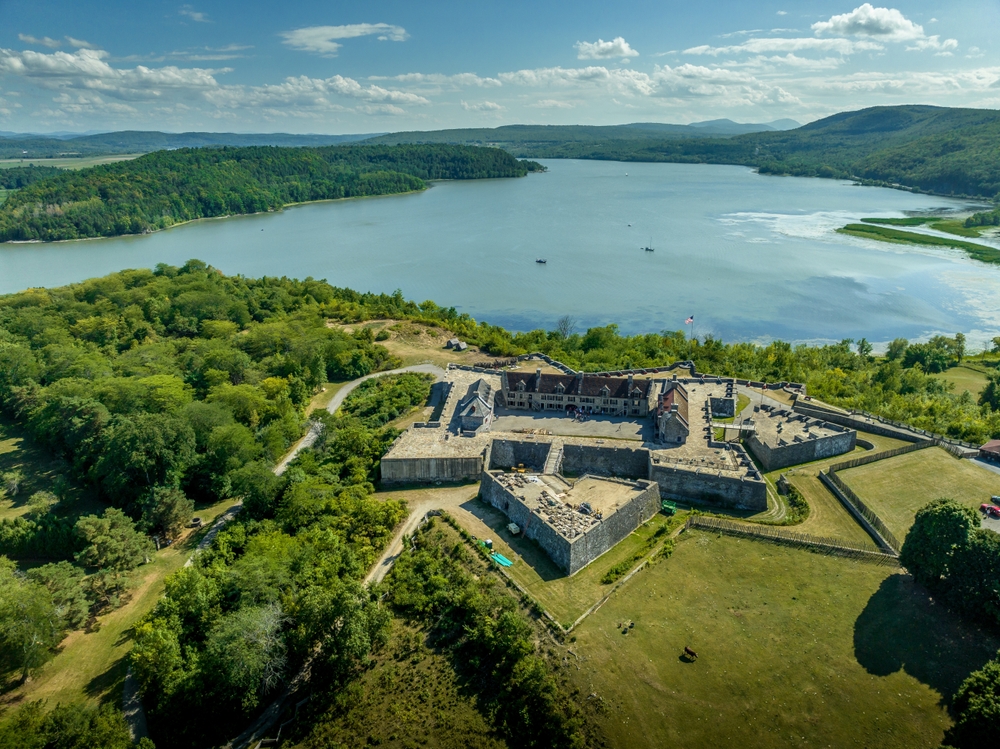
1. Fort Ticonderoga: The “Gibraltar of the North.”
- The Mission: Drive two hours north of Saratoga to see where the King’s Cannon was captured.
- The Reward: The view of Lake Champlain from the ramparts is the best in the state. In 2026, their Real Time Revolution program is the gold standard for immersive reenactment.
- Vibe: Rugged and cinematic.
2. Trenton & Princeton: The “Ten Crucial Days.”
- The Mission: A high-stakes pitstop between Philly and NYC.
- The Reward: Stand at the Delaware River where Washington crossed in the dark, then drive 15 minutes to Princeton University to see the cannonball scars on Nassau Hall.
- Vibe: Gritty, fast-paced, and triumphant.
3. Kings Mountain: The Frontier Fight
- The Mission: Head into the South Carolina backcountry, away from the coastal elegance of Charleston.
- The Reward: Here, the war was bloody, desperate, and local. Here, you had no uniforms, no grand parades, just frontiersmen in the woods defending their homes.
- Vibe: Wild, and fiercely local.
4. Gettysburg: The “Four Score” Connection
- The Mission: A 2.5-hour pivot from Philadelphia.
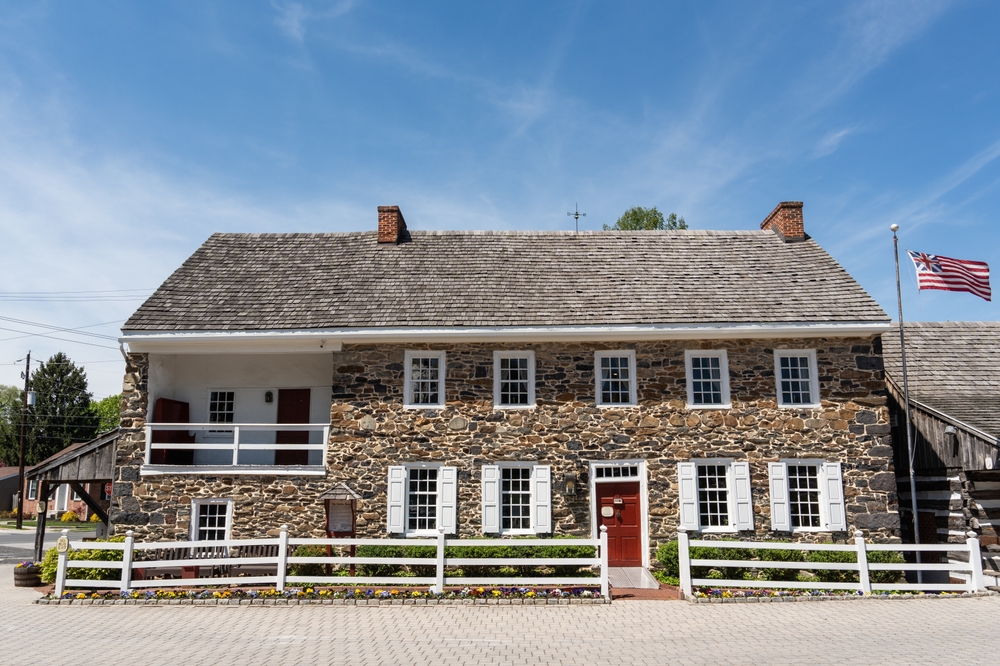
- The Reward: Gettysburg wasn’t a Revolutionary site, but it is where the Revolution was saved. In 2026, the town is hosting a major Gettysburg Film Festival (April 2026), focusing on the ties between the Founding and the Civil War. Eat at the Dobbin House Tavern. Built in 1776, it’s the oldest house in town and one of the few places in America where you can dine in a building as old as the Declaration itself.
- Vibe: Solemn, vast, and perspective-shifting.
Recommended Tours:
- Gettysburg: Private Tour with Licensed Battlefield Guide Book Here
- Civil War Ghosts: Echoes of the Fallen Gettysburg Ghost Tour Book Here
- Gettysburg: Horse-Drawn Carriage Battlefield Tour Book Here
If you will be flying to any of these destinations, read my article about not getting sick on the plane!
The “Revolutionary Route”: A 7-Day America At 250 Itinerary By Train
The easiest way to experience the Semiquincentennial without losing your mind to traffic or parking apps is by train. Travelling on the Amtrak Northeast Regional train, it will drop you in the city centre.
Day 1–2: Boston
Start your journey where the revolution started. Spend Day 1 walking the Freedom Trail early before moving on to the other Revolutionary War sites.
On Day 2, take a quick 30-minute ride-share or tour to Lexington and Concord to see the battle sites there.
Where To Stay In Boston
- High End: The Whitney Hotel Boston
- Moderate: Harborside Inn
- Budget: Copley House
Recommended Tours In Boston
- Boston: Full Revolution Story Epic Small Group Walking Tour Book Here
- From Boston: Full-Day Historical Lexington & Concord Tour Book Here
- Boston: 250 Freedom Trail Walking Tour Book Here
Day 3: NYC
Take a morning train from Boston to NYC. Head to Lower Manhattan for a walk through Federal Hall and Trinity Churchyard. Don’t miss dinner at Fraunces Tavern, the oldest building in Manhattan.
Where To Stay In New York
- High End: The Evelyn NoMad
- Moderate: Moxy NYC Times Square
- Budget: Hotel 309
Recommended Tours In New York
- NYC: Wall Street Tour with 9/11 Memorial and Statue Ferry Book Here
- NYC: SUMMIT One Vanderbilt Tickets Book Here
- NYC: Empire State Building Tickets – Observatory & Museum Book Here
Day 4–5: Philadelphia
A 90-minute train ride from NYC lands you in the heart of Philly. On Day 4 do the ‘big three’: Independence Hall, the Liberty Bell, and the Museum of the American Revolution.
On Day 5, take a short trip out to Valley Forge. It gives you a real feel for the awful conditions soldiers endured.
Where To Stay In Philadelphia
- High End: The Rittenhouse Hotel
- Moderate: Penn’s View Hotel Philadelphia
- Budget: Archway Hotel Residence
Recommended Tours In Philadephia
- Philadelphia: Revolutionary Walk Through Historic Old City Book Here
- Philadelphia: History, Highlights & Revolution Walking Tour Book Here
- Philadelphia: Revolution and The Founders History Tour Book Here
Day 6–7: Washington, D.C.
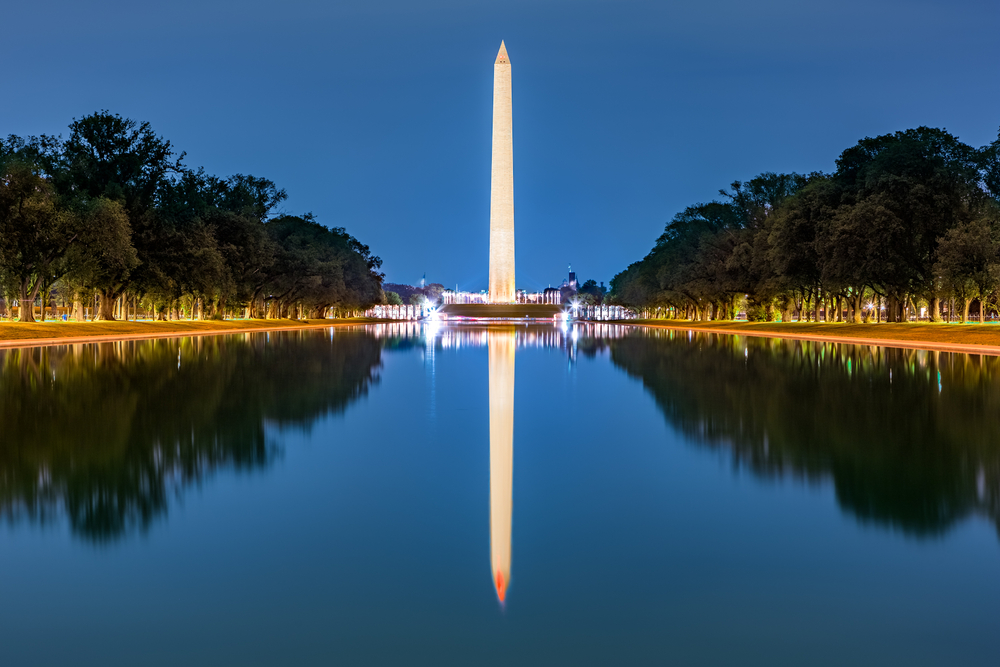
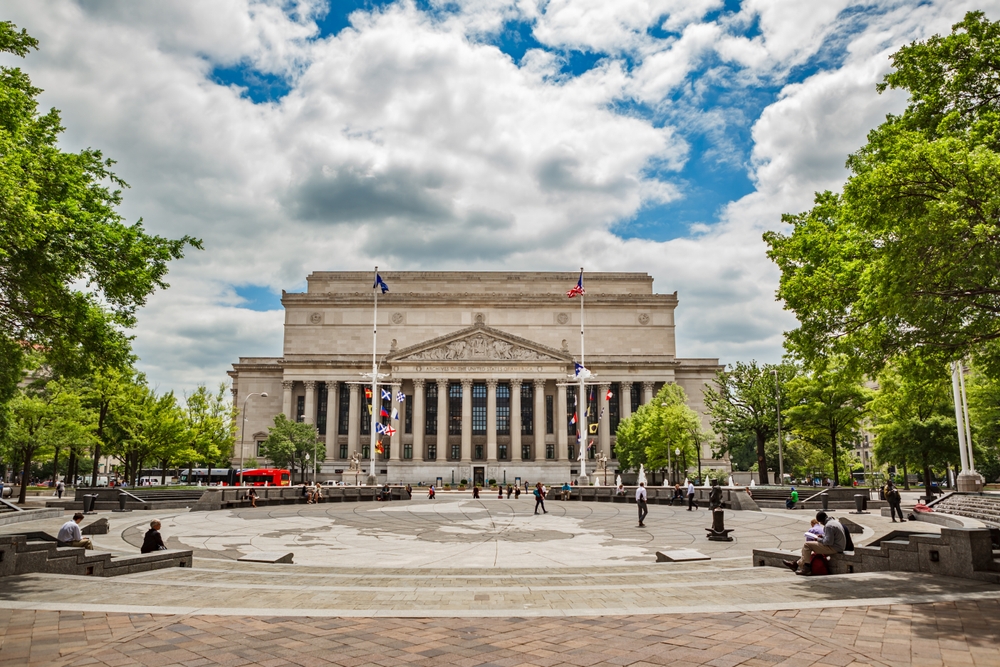
The final train ride takes you south to D.C. Spend Day 6 on the National Mall, moving slowly between monuments. Staying in the city on Day 7, head to the National Archives to see the original Declaration.
In 2026, the Smithsonian 250th Festival will be running all summer on the Mall. Check the daily schedule for pop-up performances and living history workshops.
If you are looking for more iconic train journeys across epic America train trips will be perfect for you.
Where To Stay In Washington
- High End: The Hay – Adams
- Moderate: The Quincy
- Budget: Ivy City Hotel
Recommended Tours In Washington
- DC: Capitol Hill and Library of Congress Tour with Tickets Book Here
- DC: White House, National Mall and Lincoln Memorial Tour Book Here
- Washington, DC: Day & Night Electric Cart & Vintage Car Tour Book Here
America at 250: Essentials Packing List
Here are my tips on how to pack lightly. using a carry-on when traveling. And WHY it is almost a necessity!
This unisex RFID-blocking concealed travel pouch is lightweight and comes in several colors.
These RFID sleeves are another solution.
This Anker high-speed phone charging battery is the exact one I carry on all my trips.
My daughter gifted me this FugeTek selfie stick and tripod setup for my birthday.
It is made of lightweight aluminum and is so easy to use.
I never leave home on a trip without a non-disposable water bottle.
Then this collapsible silicone foldable water bottle would work well for you.
This foldable water-resistant backpack would be great for a daily go-pack.
These quick-dry slip-on Aqua shoes will be useful when visiting beaches or spas during your vacation.
These men’s quick-dry trunks are essential.
For women, this one-strap one-piece bathing suit is amazing.
Consider bringing along quick-dry super-absorbent microfiber towels.
This wet-dry bag with handles is a good option.
These unisex polarized sunglasses come in many lens colors and frame designs and are extremely affordable, too.
If you like aviator-style sunglasses, these polarized aviators may interest you.
As an Amazon Affiliate, I earn from your qualifying purchases.
America at 250: Traveler’s Toolkit
Use these official sites to help plan your trip.
- America250.org: The primary hub for nationwide “Semiquincentennial” events, from the National Scrollathon to local community festivals.
- Sail250.org: The official tracking site for the international fleet of Tall Ships as they move from New Orleans to Boston in the summer of 2026.
- VisitPhilly.com: Specifically for the “Red, White, & Blue To-Do” festival schedule in Philadelphia.
- Recreation.gov: This is the most important app to download. Independence Hall: Tickets are released in a 30-day rolling window at 10:00 AM ET. Washington Monument: These often sell out in seconds for the summer season. Check for “Day-Before” releases at 10:00 AM ET.
- Amtrak.com: For the “Revolutionary Route” (Northeast Regional train). Booking 6 months in advance is the sweet spot for the best prices.
 Alaska Cruise Packing List: Perfect For Any Time Of Year